G2W32 CNC Rebar Bending Center
Dual Servo | Auto Feeding | Labor Saving | Heavy-load Anti-deformation | Preferred for Mass Stirrup Prefabrication.
Since 1996
Manufacturer in Changge City
20,000 m²
Factory, 150+ employees
ISO9001
SGS / TUV inspected, CE certified
24h online
Pre-sale and after-sale support
G2W32 CNC Rebar Bending Center Description
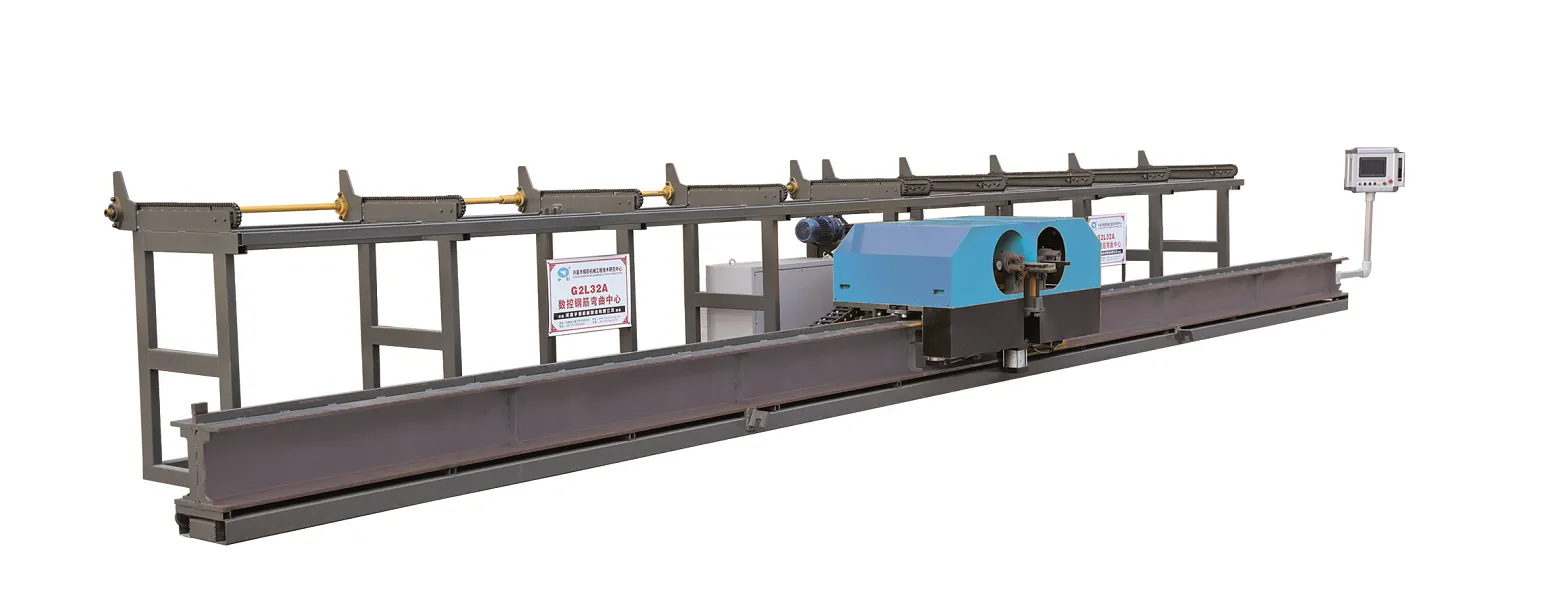
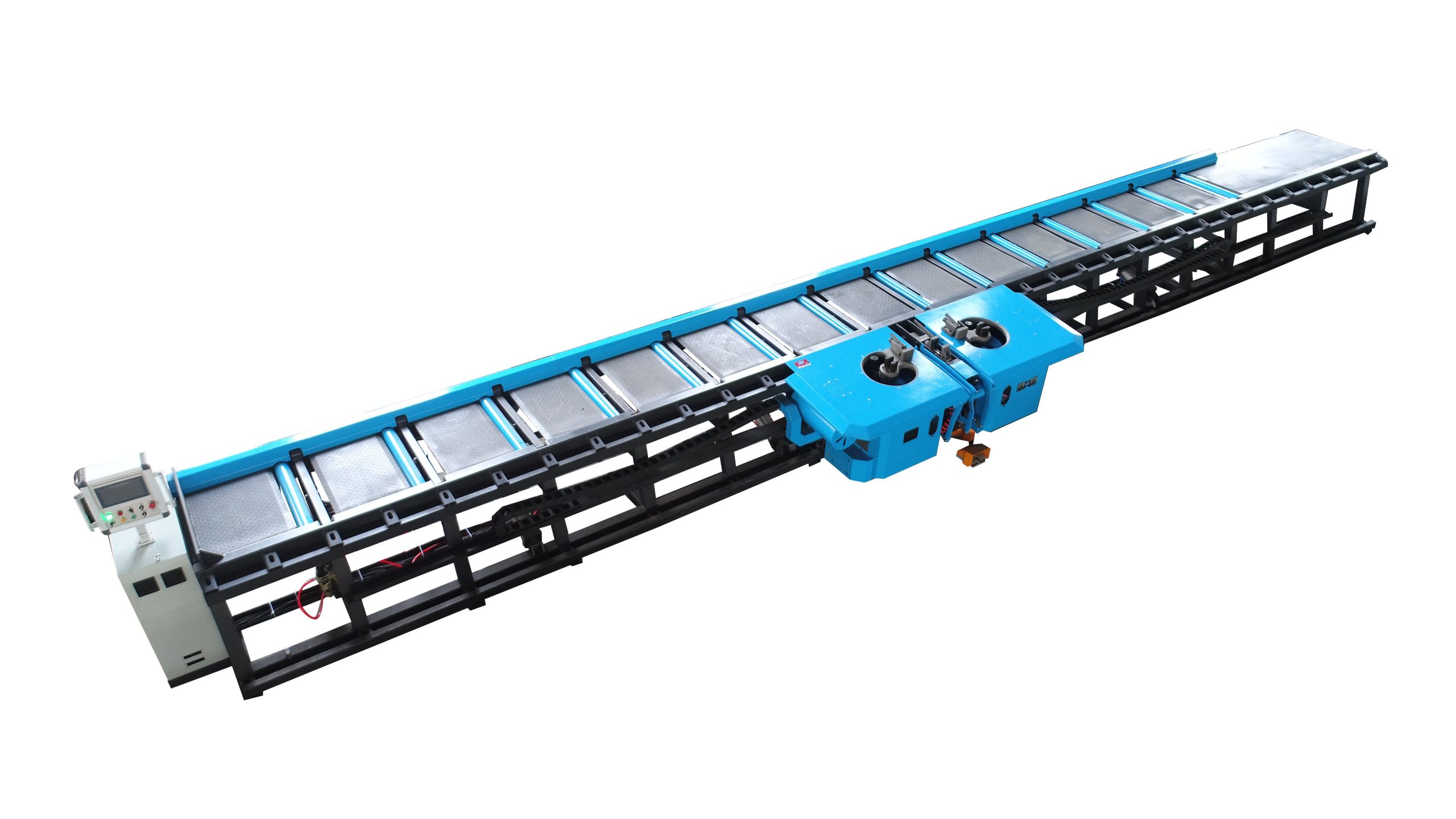
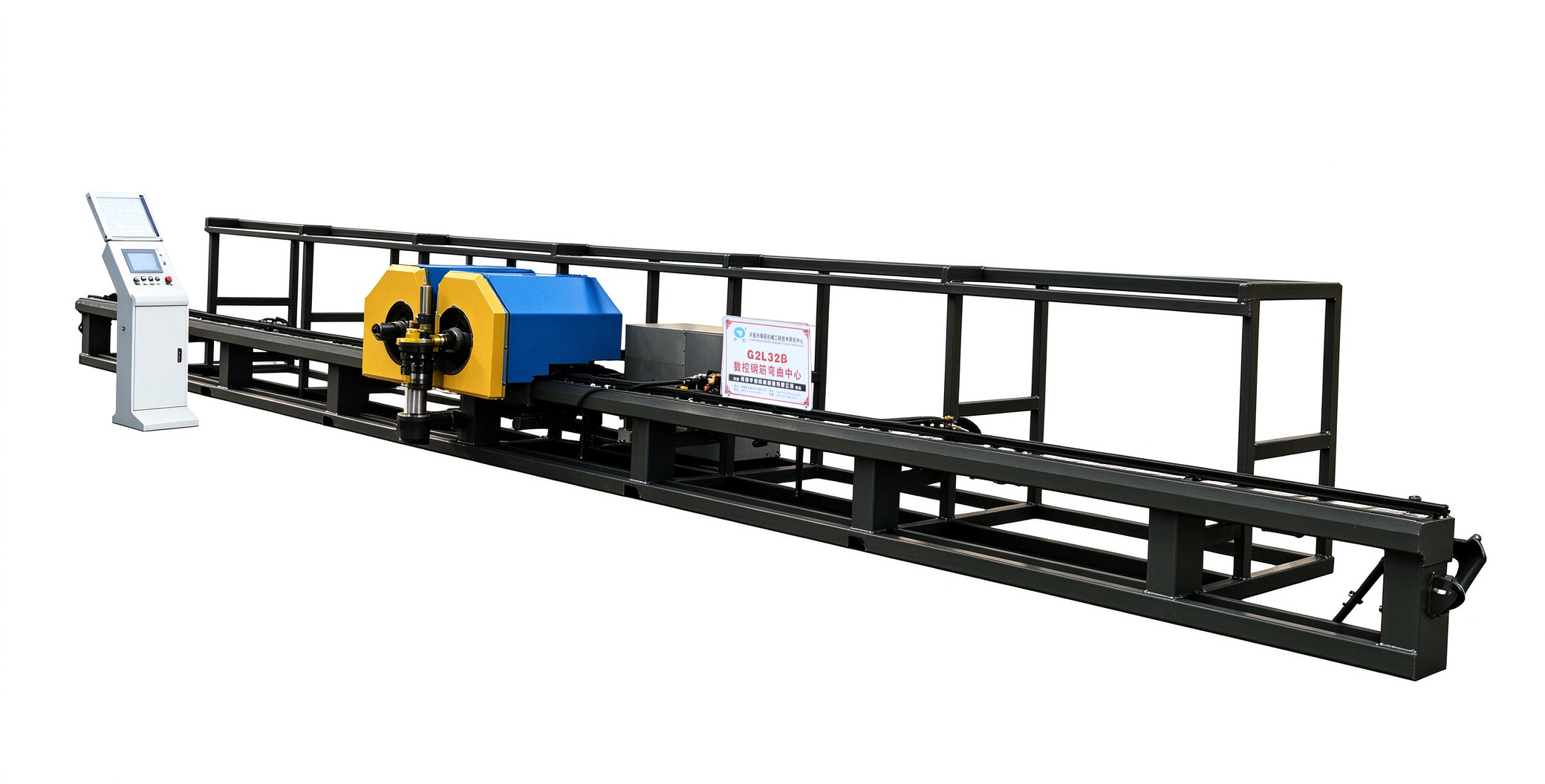
The horizontal rebar bending center is a CNC rebar processing equipment. It boasts a wide processing range and strong stability. It is especially suitable for large-scale rebar processing plants and precast component projects, serving as core equipment for intensive rebar processing. It has been widely used in domestic expressway, bridge, water conservancy and building construction projects.
Dual bending heads are independently driven by servo motors to realize synchronous bi-directional bending and digital control of length and angle. The bending heads run smoothly with high positioning accuracy. The bending spindle adopts frequency conversion control, featuring small machining error and low energy consumption, and can process rebars of various diameters in batches.
The whole machine is equipped with an extended conveying bracket and heavy-duty moving guide rails, featuring strong load-bearing capacity and resistance to deformation under long-term heavy-load operation. Matched with an automatic feeding mechanism, it enables continuous feeding and processing of rebars.
The equipment is easy to operate. Only a small number of operators are required for production. It delivers uniform finished products with low scrap rate, ideal for mass centralized prefabrication of rebars.
Main Feature:

 A: The whole machine adopts 380V three-phase industrial power. The total power varies by model, and the servo system features low no-load power consumption. Some models with pneumatic unloading require a supporting air compressor. Configuration can be confirmed during model selection to plan workshop power and air supply in advance.
A: The main machine comes with a one-year warranty. Bending dies, bending mandrels and guide wheels are wearing parts. The manufacturer keeps regular stock of wearing parts for fast delivery and long-term spare parts supply to reduce downtime waiting.
A: Production capacity depends on steel bar diameter, shape complexity and number of bars processed simultaneously. Mass forming can be achieved for standard sizes per hour, supporting continuous two-shift operation. Theoretical capacity can be calculated based on your rebar drawings to match the production demand of your rebar yard.
A: The control system supports drawing import or manual graphic programming. Programs for special-shaped rebars and multi-bend hooks can be saved with serial numbers for direct recall next time. Operators can modify dimensions easily after mastering basic operations without rewriting programs every time.
A: The machine adopts a modular structure for split transportation. The manufacturer provides parameters of length, width, height and total weight to help pre-plan factory gates, roads and hoisting schemes for easier on-site positioning and installation.
A: It can process high-strength deformed steel bars such as HRB400 and HRB500. The machine is equipped with rebar springback compensation function. With matched bending dies and properly set bending radius, the formed rebars stay free of cracks and meet engineering acceptance standards.
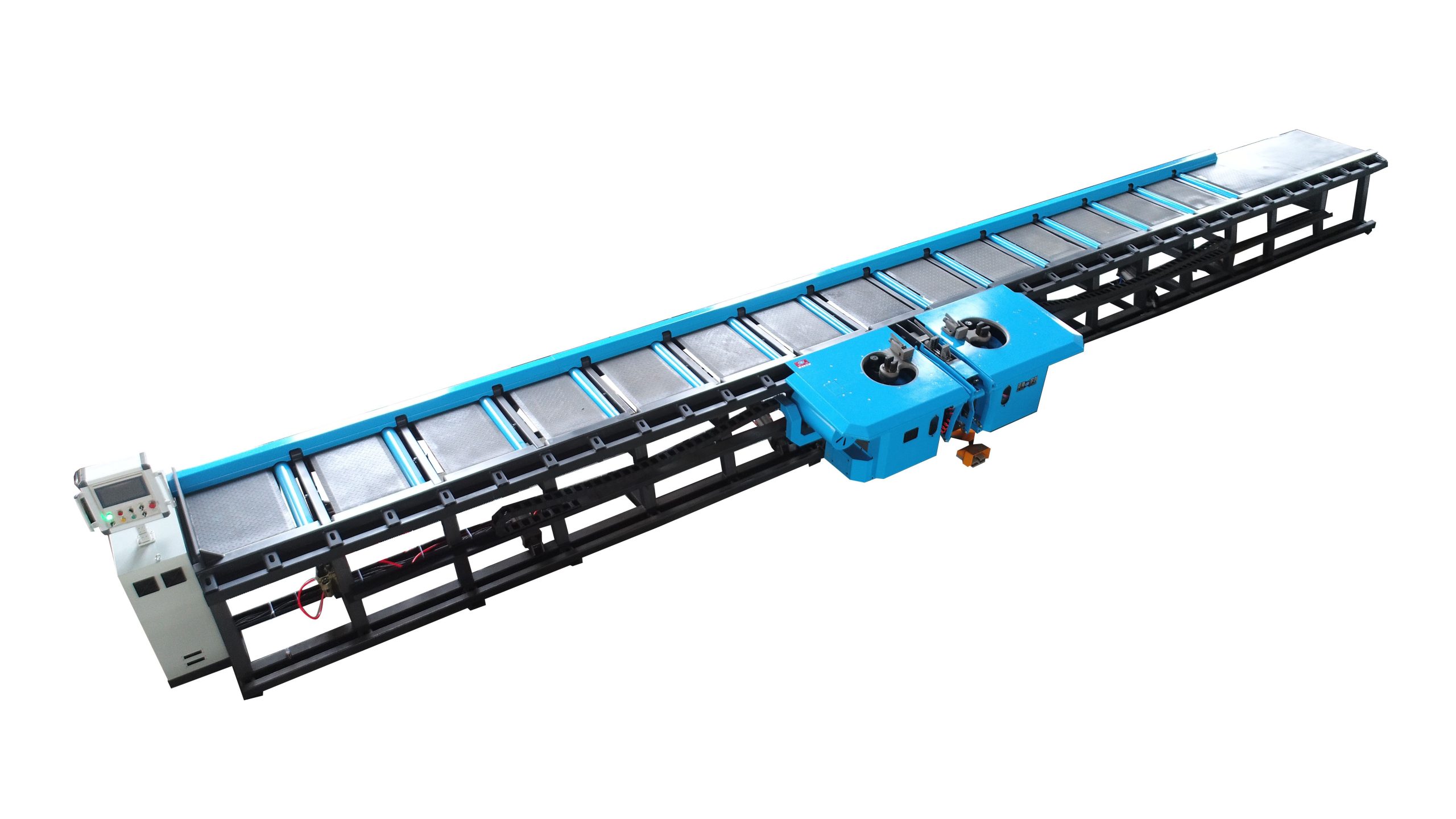
- Horizontal plane bending structure. Long rebars are fully supported by roller supports without suspension and shaking during processing, delivering excellent forming stability and ideal for extra-long rebar forming.
- Dual independent mobile bending heads, capable of separate or synchronized bidirectional bending. Both ends of rebar can be formed at the same time without manual repositioning for high processing efficiency.
- Low table layout with low feeding height. Rebar placement and finished product transfer are easy, no hoisting required. It improves operation safety and reduces the risk of injury from springback.
- Heavy-duty frame welded with thick steel plates, featuring large load capacity. It can process high-strength rebars HRB400 and HRB500 up to Φ50.
- The head travel adopts high-precision rack & pinion drive for accurate positioning, and the bending length can be freely set by CNC.
- Servo-driven bending spindle with closed-loop angle control. Rebar angle and dimension consistency of the same batch is excellent, minimizing waste and rework.
| Parameter | G2W32 | G2W40E | G2W50E |
| Rebar processing diameter | 12-32 mm | 12-40 mm | 12-50 mm |
| Bending angular speed | 45-60°/s | 45-60°/s | 45-60°/s |
| Bending machine travel speed | 0.5-0.9 m/s | 0.5-0.9 m/s | 0.5-0.9 m/s |
| Bending angle | Forward 0-180°, reverse 0-120° | Forward 0-180°, reverse 0-120° | Forward 0-180°, reverse 0-120° |
| Installed power | 17.1 kW + 5.5 kW (air compressor) | 19 kW + 5.5 kW (air compressor) | 29.5 kW + 5.5 kW (air compressor) |
| Max. roller table conveying load | 1000 kg | 1000 kg | 1000 kg |
| Min. bending head center distance | 1200 mm | 1200 mm | 1200 mm |
| Max. bending head center distance | 1300 mm | 1300 mm | 13000 mm |
| Machine overall dimensions | 12.5 m × 3 m × 1.1 m | 12.5 m × 3 m × 1.1 m | 12.5 m × 3 m × 1.1 m |
| Machine weight | approx. 6.5 t | approx. 6.5 t | approx. 6.5 t |
Horizontal Steel Bar Bending Center FAQ
Q: What is the power consumption of the horizontal bending center? What power supply is required? Is an air compressor needed?
A: The whole machine adopts 380V three-phase industrial power. The total power varies by model, and the servo system features low no-load power consumption. Some models with pneumatic unloading require a supporting air compressor. Configuration can be confirmed during model selection to plan workshop power and air supply in advance.Q: What is the equipment warranty period? What are the wearing parts? Is the lead time for spare parts long?
A: The main machine comes with a one-year warranty. Bending dies, bending mandrels and guide wheels are wearing parts. The manufacturer keeps regular stock of wearing parts for fast delivery and long-term spare parts supply to reduce downtime waiting.Q: Approximately how many steel bars can the horizontal bending center process per hour? How to calculate production capacity?
A: Production capacity depends on steel bar diameter, shape complexity and number of bars processed simultaneously. Mass forming can be achieved for standard sizes per hour, supporting continuous two-shift operation. Theoretical capacity can be calculated based on your rebar drawings to match the production demand of your rebar yard.Q: Can the equipment import CAD rebar drawings to generate processing programs automatically? Is it easy to program for special-shaped rebars?
A: The control system supports drawing import or manual graphic programming. Programs for special-shaped rebars and multi-bend hooks can be saved with serial numbers for direct recall next time. Operators can modify dimensions easily after mastering basic operations without rewriting programs every time.Q: What are the transport weight and overall dimensions of the equipment? Is loading and hoisting on site convenient?
A: The machine adopts a modular structure for split transportation. The manufacturer provides parameters of length, width, height and total weight to help pre-plan factory gates, roads and hoisting schemes for easier on-site positioning and installation.Q: Can high-strength steel bars of different grades (HRB500) be processed? Will the bars crack during bending?
A: It can process high-strength deformed steel bars such as HRB400 and HRB500. The machine is equipped with rebar springback compensation function. With matched bending dies and properly set bending radius, the formed rebars stay free of cracks and meet engineering acceptance standards.Related Products
How We Work With You
- 1Solution Development
- 2Manufacturing and commissioning
- 3Operational Production
- 4Business Negotiation
Questions before you decide? See the FAQ.